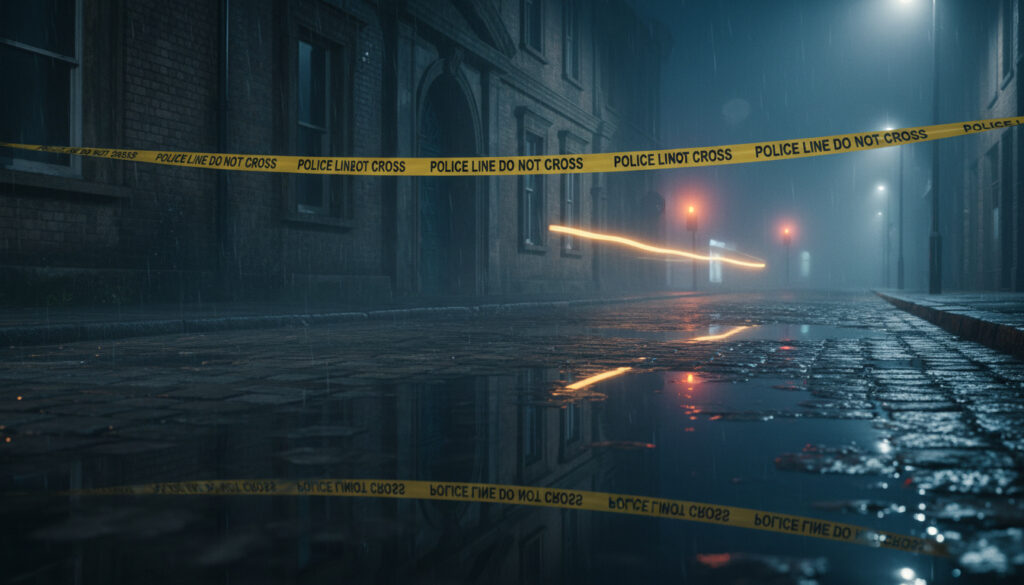
The Fall (TV Series) – Gripping Thriller Breakdown
The Fall emerged as one of the most distinctive psychological thrillers in British television history when it debuted on BBC Two in 2013. Created by Allan Cubitt, the series subverted traditional crime drama conventions by revealing the killer’s identity from the outset while tracking the meticulous hunt led by Detective Superintendent Stella Gibson, portrayed by Gillian Anderson. IMDb records the show’s lasting impact, with particular praise for its atmospheric direction and complex character studies. Across three series, the production carved out a reputation for its unflinching examination of predatory violence and institutional power dynamics, set against the atmospheric backdrop of Belfast.
Key Facts
Creator: Allan Cubitt
Starring: Gillian Anderson, Jamie Dornan
Network: BBC Two / BBC Northern Ireland
Series: 3 (2013–2016)
Episodes: 17
Setting: Belfast, Northern Ireland
Insights
Unlike conventional procedurals that rely on whodunit mechanics, The Fall operated as an inverted detective story. The Guardian observed that the narrative tension derived not from obscuring the perpetrator but from the parallel exploration of hunter and hunted. Paul Spector, played by Jamie Dornan, worked as a bereavement counsellor by day while stalking victims at night, creating a bifurcated existence that the series examined with clinical precision. This structure allowed Cubitt to explore themes of voyeurism, misogyny, and the male gaze while Gibson’s investigation countered with a distinctly feminist perspective.
Episode Guide
| Series | Episodes | Original Broadcast | Average Viewership |
|---|---|---|---|
| 1 | 5 | 13 May – 10 June 2013 | 4.1 million |
| 2 | 6 | 13 November – 18 December 2014 | 4.4 million |
| 3 | 6 | 29 September – 28 October 2016 | 5.0 million |
Production Details
Production commenced in Belfast in January 2012, with the city itself functioning as a character rather than mere backdrop. The decision to shoot in Northern Ireland capitalized on the region’s complex architectural landscape, from Victorian terraces to modern developments. Variety noted that the show utilized these locations to create a sense of intimacy and dread. Gibson’s character was deliberately constructed as an outsider, transferred from London to the Metropolitan Police in Belfast, allowing the narrative to navigate local political sensitivities while maintaining focus on the central cat-and-mouse dynamic. The costume design emphasized Gibson’s professional armor, with her silk blouses becoming signature elements that contrasted with the clinical nature of her work.
Timeline
- 2012: Allan Cubitt scripts commissioned by BBC Drama Northern Ireland
- January 2013: Principal photography begins in Belfast
- May 2013: Series one broadcasts to critical acclaim
- November 2014: Series two introduces new characters and escalates stakes
- September 2016: Third and final series premieres
- October 2016: Series concludes with ambiguous finale
Narrative Resolution
The conclusion of series three generated significant discussion regarding Spector’s fate and the open-ended final moments. Rotten Tomatoes aggregates reviews noting the deliberate ambiguity of the finale. Cubitt has maintained that the ending served its thematic purpose: exploring whether Spector’s violence represented innate pathology or social conditioning became less relevant than examining the institutional responses to such crimes. Gibson’s final scene, walking through London, suggested continuity rather than closure—a woman continuing her work while carrying the weight of her investigations.
Critical Analysis
Critical reception evolved throughout the show’s run. While initial reviews praised the atmospheric direction and Anderson’s performance, later series faced scrutiny regarding the portrayal of violence against women. The series maintained significant viewership throughout its run. Radio Times commended the final season for its refusal to provide easy answers. The show sits within the tradition of British crime dramas that challenge genre conventions, utilizing the serial killer narrative to examine surveillance culture in Northern Ireland, a region historically defined by security concerns.
Cast Perspectives
“I wanted to make a drama about the investigation of a serial killer where we understood the killer as a human being, not as a monster.”
— Allan Cubitt, Creator
“She’s a woman who is completely comfortable with her sexuality and her power, and she doesn’t apologize for it.”
— Gillian Anderson on Stella Gibson
“It’s a strange thing to inhabit someone with that capacity for violence while trying to maintain their humanity.”
— Jamie Dornan on Paul Spector
Conclusion
The Fall stands as a landmark in prestige British television, demonstrating the BBC’s capacity for complex, adult-oriented storytelling. By eschewing easy morality and embracing ambiguity, the series offered a nuanced examination of predation and power. Its legacy persists in the wave of subsequent crime dramas adopting similar inverted structures, while Anderson’s portrayal remains a benchmark for complex female leads in television reviews and critical studies alike.
Frequently Asked Questions
Will there be a fourth series of The Fall?
No, the show concluded with series three in 2016. Creator Allan Cubitt has stated that the story reached its natural conclusion, though he has expressed interest in potentially revisiting the character of Stella Gibson in a different context.
Where was The Fall filmed?
Principal photography took place entirely in Belfast, Northern Ireland, utilizing locations throughout the city including the Cathedral Quarter, Malone Road, and various residential areas.
Is The Fall based on a book?
No, the series is an original creation by writer Allan Cubitt, though it draws inspiration from various psychological and criminological texts regarding serial offending behavior.
How did the show approach the violence it depicted?
The series employed a methodology of showing the aftermath rather than the act itself in many instances, focusing on the psychological impact on victims and investigators rather than gratuitous depiction. This approach generated debate about the representation of violence against women in media.
More related posts
 Charmian Carr: Death, Age, and Life After ‘The Sound of Music’
 What Season Are We In – Current Dates By Hemisphere
 Vincent D’Onofrio: Health, Career, Divorce & Net Worth
 Graham Greene (Actor) – Biography, Films and Legacy
 Nathalie Emmanuel: Biography, Career & Key Facts
 Aston Villa vs Chelsea: Head-to-Head, Prediction & Live Updates
 Sweden vs England Women’s Euro 2025: Result and Penalties
 Trey Parker: Net Worth, Voices, and Friendship with Matt Stone