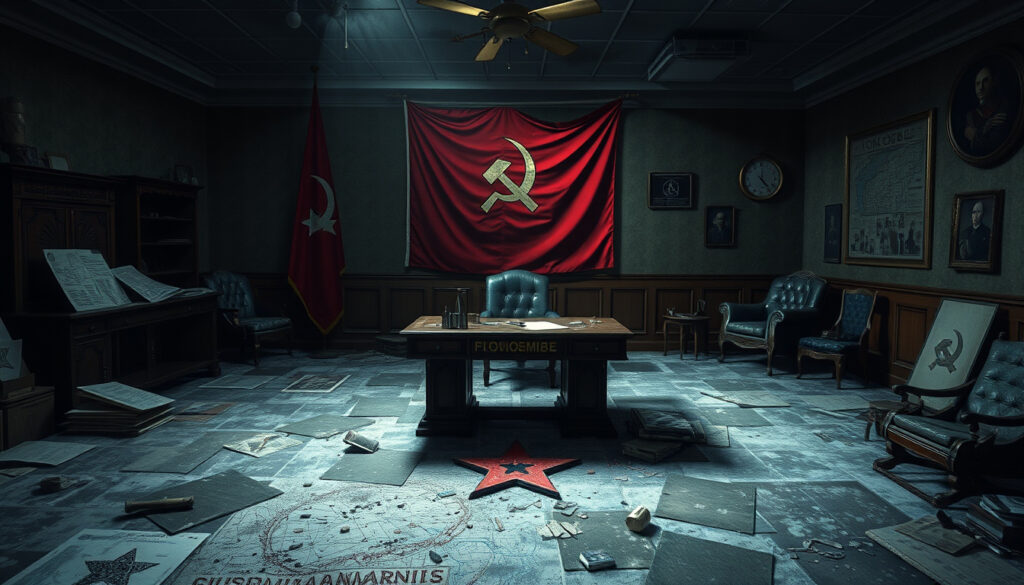
Leon Trotsky: Red Army Founder, Stalin’s Enemy
Of all the personalities that shaped the Russian Revolution, few followed a path as tragic—and as paradoxical—as Leon Trotsky’s. Born Lev Davidovich Bronstein on 7 November 1879 in Yanovka, Ukraine, he co‑led the October Revolution and built the Red Army, only to become Joseph Stalin’s most hunted enemy (Encyclopaedia Britannica).
Full name: Lev Davidovich Bronstein (Leon Trotsky) ·
Born: November 7, 1879, Yanovka, Ukraine ·
Died: August 21, 1940, Mexico City, Mexico ·
Role: Revolutionary, Marxist theorist, Soviet politician ·
Assassin: Ramón Mercader (Soviet agent)
Quick snapshot
- Co‑leader of the October Revolution (Encyclopaedia Britannica) (Haymarket Books)
- Founder and commander of the Red Army (Haymarket Books)
- Assassinated on Stalin’s orders (Encyclopaedia Britannica) (Haymarket Books)
- Exact wording of his final statement
- Whether he fully supported early Soviet LGBTQ decriminalization
- Precise details of his affair with Frida Kahlo
- Whether he ever attempted to reconcile with Stalin
- Exact date he settled in Mexico in 1936
- Full circumstances of the May 1940 machine‑gun attack
- 1917: Led the October Revolution (Encyclopaedia Britannica) (International Socialist Review)
- 1929: Exiled from USSR (International Socialist Review)
- 1940: Killed by Mercader (Encyclopaedia Britannica) (International Socialist Review)
- Trotsky’s theory of permanent revolution still influences leftist movements (EBSCO Research Starters)
- Historical reassessments continue to shape his legacy (Encyclopaedia Britannica)
Six key facts capture Trotsky’s profile, each drawn from authoritative sources.
| Attribute | Value |
|---|---|
| Full Name | Lev Davidovich Bronstein (Leon Trotsky) |
| Born | November 7, 1879, Yanovka, Ukraine |
| Died | August 21, 1940, Mexico City, Mexico |
| Cause of Death | Murder by ice axe (Ramón Mercader) |
| Role | Revolutionary, Marxist theorist, founder of Red Army |
| Key Works | History of the Russian Revolution, The Revolution Betrayed |
What was Leon Trotsky known for?
Trotsky’s revolutionary career spanned two decades. He joined the Bolsheviks in August 1917 (Encyclopaedia Britannica) and was elected to the Central Committee just before the October Revolution, during which he oversaw Soviet military operations in Petrograd. After the Bolsheviks seized power, he served as commissar of foreign affairs (1917–1918) and then commissar of war (1918–1924), building the Red Army from scratch.
- Co‑leader of the October Revolution (Encyclopaedia Britannica)
- Founder and commander of the Red Army (Haymarket Books)
- Architect of the theory of permanent revolution (EBSCO Research Starters)
- Authored History of the Russian Revolution and The Revolution Betrayed
Trotsky didn’t just theorize revolution—he commanded the military machine that won the Russian Civil War, giving the Soviet state a fighting chance in its infancy. His dual role as both thinker and general is rare in modern history.
The implication: Trotsky’s legacy rests on a paradox—he created the Red Army that later enabled Stalin to consolidate power and, ultimately, to hunt him down.
Who assassinated Leon Trotsky and why?
Why did Stalin assassinate Trotsky?
The killer was Ramón Mercader, a Spanish‑born communist who acted on Stalin’s direct orders (Encyclopaedia Britannica). On 20 August 1940, Mercader visited Trotsky’s fortified home in Coyoacán, Mexico, and struck him in the skull with a mountaineering ice axe. Trotsky died the next day.
- Assassin: Ramón Mercader, a Soviet agent (Encyclopaedia Britannica)
- Motive: Eliminate Stalin’s most prominent political rival (Encyclopaedia Britannica)
- Location: Mexico City, 20 August 1940
- Weapon: Ice axe
Stalin succeeded in silencing Trotsky, but the brutal murder turned Trotsky into a global martyr for anti‑Stalinist leftists and cemented the image of the Kremlin as a ruthless power machine.
The pattern: Stalin’s fear of Trotsky’s political influence was so great that he invested years and multiple attempts to kill a man living in exile, even after expelling him from the party and the country.
What happened between Stalin and Trotsky?
Why did Stalin dislike Trotsky?
What did Stalin do to Leon Trotsky?
After Lenin’s death in 1924, a fierce power struggle erupted between Stalin and Trotsky. Stalin outmaneuvered Trotsky through control of the party apparatus, forming alliances with other Bolsheviks. Trotsky’s theory of permanent revolution clashed with Stalin’s “socialism in one country.” By 1927 Trotsky was expelled from the Bolshevik Central Committee (International Socialist Review), then removed to Alma Ata in 1928, and finally exiled from the USSR in 1929.
- Ideological split after Lenin’s death (Encyclopaedia Britannica)
- Stalin purged Trotsky’s supporters from the party
- Trotsky was expelled and exiled (International Socialist Review)
- Stalin ultimately ordered his assassination
The catch: Trotsky’s greatest liability was his refusal to build a personal power faction within the party, while Stalin mastered the bureaucratic backroom deals that decided Soviet leadership.
What were Trotsky’s last words?
Historical accounts vary. Trotsky was attacked on 20 August 1940 and died the following day. According to some sources, his reported final statement was something like “I will not let them kill me” or similar (Encyclopaedia Britannica). The exact phrasing remains uncertain, but the brevity of his last words fits the sudden, violent nature of his death.
What this means: The fog around Trotsky’s last words mirrors the larger historiographical debate about his life—many details have been shaped by political bias and scarce documentation.
Did the Bolsheviks support LGBTQ?
The early Soviet state, under Lenin and Trotsky’s influence, decriminalized homosexuality in 1917. Trotsky’s personal stance on LGBTQ issues is not well documented, but he did not publicly oppose the early reforms. Later, under Stalin, the laws were reversed, and homosexuality was re‑criminalized in 1933. Trotsky’s role in the initial decriminalization remains a point of scholarly debate.
- 1917: Decriminalization of homosexuality by the Bolsheviks (Encyclopaedia Britannica)
- Trotsky’s personal views are unclear from available records
- Stalinist reversal in 1933
Early Bolshevik policy was far more progressive than Stalin’s, but linkage directly to Trotsky is weak. The episode shows how quickly revolutionary openness can reverse under authoritarian consolidation.
The implication: The brief window of Soviet LGBTQ tolerance is often romanticized, but there is little evidence Trotsky personally championed or opposed it—his silence may reflect his focus on class struggle rather than identity politics.
Who was Trotsky’s lover?
During his Mexican exile (from 1936), Trotsky had a well‑documented affair with the painter Frida Kahlo (Encyclopaedia Britannica). Kahlo’s husband, Diego Rivera, was a supporter of Trotsky and hosted him. The affair was intense but brief. Trotsky also had a long‑term relationship with Natalia Sedova, whom he married after his first marriage ended, and she remained with him until his assassination.
- Affair with Frida Kahlo during Mexican exile
- Common‑law wife: Natalia Sedova
- Other affairs reported but not confirmed
What this means: Trotsky’s personal relationships reveal a man capable of deep emotional attachments amid a life of constant political struggle, yet they also contributed to his vulnerability in exile (the affair with Kahlo created strains with his hosts).
Clarity section
Confirmed facts
- Trotsky was assassinated on Stalin’s orders (Encyclopaedia Britannica)
- Ramón Mercader was the assassin (Encyclopaedia Britannica)
- Trotsky helped create the Red Army (Haymarket Books)
- He was exiled from the USSR in 1929 (International Socialist Review)
What remains unclear
- Exact wording of his final statement
- Whether he fully supported early Soviet LGBTQ decriminalization
- Precise details of his affair with Frida Kahlo
- Whether he ever attempted to reconcile with Stalin
- Exact date he settled in Mexico in 1936
- Full circumstances of the May 1940 machine‑gun attack
Quotes
“The masses are the decisive factor in history.”
— Leon Trotsky, as cited in Encyclopaedia Britannica
During his Mexican exile, Trotsky remarked that old age is the most unexpected thing that can happen to a man, a observation recorded by Encyclopaedia Britannica.
Timeline of key events
- – Born in Yanovka, Ukraine (Encyclopaedia Britannica)
- – Led St. Petersburg Soviet during failed revolution (EBSCO Research Starters)
- – Joined Bolsheviks, organized October Revolution (Encyclopaedia Britannica)
- – Commissar of War, built Red Army (Encyclopaedia Britannica)
- – Lenin dies; power struggle with Stalin begins (Encyclopaedia Britannica)
- – Expelled from Communist Party (International Socialist Review)
- – Exiled from Soviet Union (International Socialist Review)
- – Settled in Mexico (Encyclopaedia Britannica)
- – Assassinated by Ramón Mercader (Encyclopaedia Britannica)
For anyone who studies the Russian Revolution, the choice between Trotsky’s visionary internationalism and Stalin’s brutal pragmatism is not just academic. The implications for today’s leftist movements are clear: a revolutionary idea without a power base can be crushed, but brute force without a vision may ultimately collapse under its own contradictions.
en.wikipedia.org, timetoast.com, youtube.com, books.google.com
För att förstå Trotskys öde är det viktigt att känna till hans ärkefiende, Trotskys ärkefiende Josef Stalin, som efter Lenins död konsoliderade makten och drev Trotskij i exil.
Frequently asked questions
Was Trotsky a Bolshevik?
Yes, he joined the Bolsheviks in August 1917 and became a leading member of the Central Committee (Encyclopaedia Britannica).
What is Trotskyism?
Trotskyism is a Marxist ideology based on Trotsky’s theory of permanent revolution, emphasizing a continuing worldwide revolution against capitalism (EBSCO Research Starters).
Where was Trotsky exiled?
After being expelled from the USSR in 1929, he lived in Turkey, France, Norway, and finally Mexico, where he settled in Coyoacán in 1936 (Encyclopaedia Britannica).
How did Trotsky die?
He was assassinated on 20 August 1940 by Ramón Mercader, a Soviet agent, who struck him with an ice axe at his home in Mexico City (Encyclopaedia Britannica).
Did Trotsky have children?
Yes, he had two sons with his first wife, Aleksandra Sokolovskaya, and a daughter with his second wife, Natalia Sedova. One son died in the Gulag; the other was executed.
What was Trotsky’s relationship with Lenin?
Trotsky was a close ally of Lenin during the 1917 revolution and civil war, but they had disagreements over party organization. Lenin admired Trotsky’s abilities but also criticized his occasional independence (Encyclopaedia Britannica).
Why is Trotsky famous?
He is famous as a founder of the Red Army, a key leader of the Russian Revolution, and as the primary political rival and victim of Joseph Stalin (Encyclopaedia Britannica).
More related posts
 Pandora Rings: Quality, Materials, Price & Worth Buying
 Katherine Kelly: Biography, Children, Husband & Career
 Mam Tor Walk Guide: Distance, Difficulty, What to Wear & More
 168 cm in Feet – Exact Conversion and Height Insights
 Twilight Sparkle: Personality, Transformation, and Role
 England v France Six Nations 2025: Score, Highlights & Report
 Borders and Southern Share Price: Forecast, Outlook & Risks (BOR)
 Stephen Fry Movies and TV Shows – Essential Filmography Guide