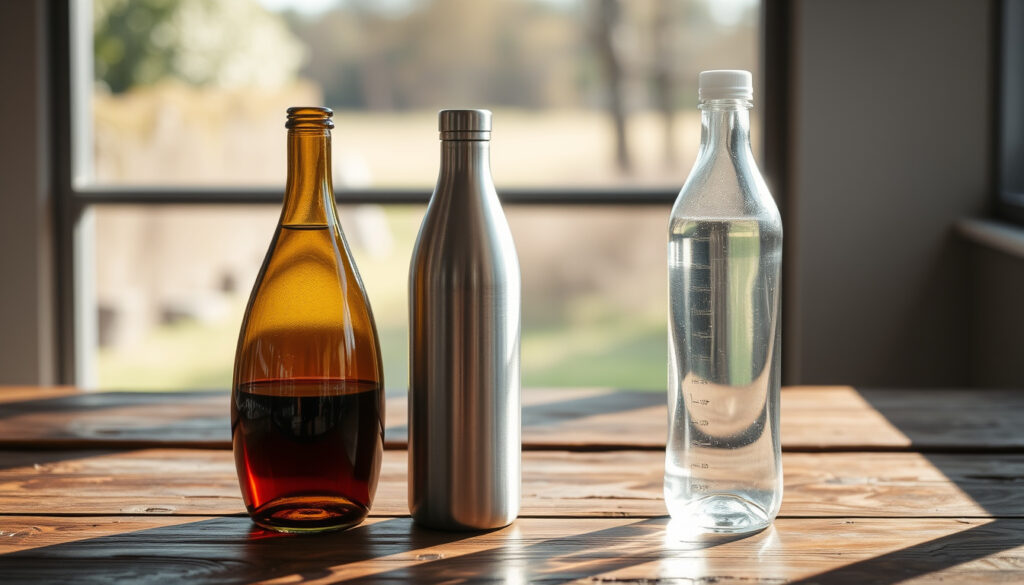
Best Water Bottles 2026: Glass vs Steel vs Plastic Guide
You’ve probably noticed the water bottle aisle looking crowded — stainless steel, glass, and plastic bottles competing for your attention. Whether you’re commuting, hiking, or at a desk, this guide cuts through the marketing noise to compare glass, stainless steel, and plastic based on durability, health impact, and real-world use in Ireland.
Decathlon Ireland water bottle models: 15 · Outdoor Gear Lab testing year: 2026 · Popular Irish water brand: Ballygowan
Quick snapshot
- Glass is non-porous and does not leach chemicals (Corkcicle, drinkware manufacturer)
- Stainless steel is durable and insulates (Outdoor Gear Lab, gear testing authority)
- Ireland’s Deposit Return Scheme started 1 February 2024 (Avendra Ireland, hospitality guide)
- Best overall material depends on use case — no single winner (Outdoor Gear Lab)
- Whether the 10 gulp rule is medically recommended is not confirmed (Outdoor Gear Lab)
- Stanley Quencher goes viral on TikTok in 2020 (The Strategist, consumer product recommendations)
- Gen Z hydration obsession becomes mainstream by 2023 (The Strategist)
- Outdoor Gear Lab tests best water bottles for 2026 (Outdoor Gear Lab)
- More Irish retailers like Penneys and Very expand water bottle ranges
- Demand for insulated stainless steel bottles continues growing
- Glass bottle market remains niche but steady for taste purists
Six key comparisons, one pattern: material choice directly shapes hydration habits, cost, and environmental impact in Ireland.
| Attribute | Value |
|---|---|
| Irish DRS start date | 1 February 2024 (Avendra Ireland) |
| Deposit ≤500ml | €0.15 (Re-turn, deposit scheme operator) |
| Deposit 500ml–3L | €0.25 (Re-turn) |
| Glass recycling rate in Ireland | Over 80% (Re-turn) |
| Recommended stainless steel grade | 304/18/8 (18% chromium, 8% nickel) (Michigan State University Extension, academic food safety) |
| Stainless steel recyclability | 100% recyclable (Michigan State University Extension) |
| Glass taste neutrality | Does not retain flavours or odours (Corkcicle) |
| Stanley Quencher viral year | 2020 (TikTok trend) |
What Type of Water Bottle is Best?
Glass vs Plastic vs Stainless Steel
- Glass: non-porous, no chemical leaching, heavy and fragile (CleverHiker, outdoor gear review site)
- Stainless steel: durable, insulated, BPA-free, 100% recyclable (Outdoor Gear Lab)
- Plastic: lightweight, low cost, potential BPA concerns, not included in Irish DRS for reusable bottles (Re-turn)
The trade-off: glass gives you purity, stainless steel gives you durability with insulation, and plastic gives you affordability. No single winner — your lifestyle decides.
How to Choose the Right Material for Your Needs
Consider your daily routine. If you’re a commuter who tosses a bottle into a bag, stainless steel (like Hydro Flask or Stanley) survives drops. For desk use where taste matters, glass (like Ballygowan’s reusable option) keeps water neutral. Plastic remains the lightest choice for travel but check for BPA-free labels (Michigan State University Extension).
The implication: your daily routine dictates the best material, so match the bottle to your lifestyle.
Why Is Gen Z So Obsessed with Water Bottles?
The Rise of Stanley Cups and Hydration Culture
Hydration has become a wellness status symbol, especially among Gen Z. The Stanley Quencher went viral on TikTok in 2020, and by 2023 the obsession was mainstream (The Strategist). In Ireland, retailers like Penneys and Very now stock trendy bottles alongside traditional brands. The message: carrying a water bottle signals that you care about your health.
Gen Z’s water bottle trend has shifted from utility to identity. Brands that fail to offer Instagram-worthy designs risk losing a generation of buyers.
What this means: for Irish retailers, the trend is a commercial opportunity, not just a hydration fad.
Social Media’s Role in Water Bottle Trends
TikTok and Instagram turn bottles into accessories. The Stanley tumbler, with its massive 2-litre capacity and colourful finish, became a must-have. Corkcicle notes that stainless steel’s insulation (keeping drinks cold for 24 hours) adds functional appeal to the aesthetic (Corkcicle).
Which Water Bottles Are Most Popular?
Top Tested Water Bottles for 2026
Outdoor Gear Lab tested and ranked the best water bottles for 2026 (Outdoor Gear Lab). Their top picks include Stanley, Hydro Flask, and Nalgene. The testing focused on durability, insulation, and ease of cleaning. Stainless steel models dominated the top five for their ability to keep drinks cold for hours.
Best Bottles for Sports and Travel
For sports, an insulated stainless steel bottle (like Hydro Flask) maintains temperature during long workouts. For travel, lightweight BPA-free plastic (like Nalgene) wins on portability. Decathlon Ireland offers 15 models covering both categories (Outdoor Gear Lab).
What Are the Healthiest Water Bottles and Brands?
Healthiest Bottled Water Brands
Ballygowan, a top Irish natural mineral water brand, is widely available and known for its purity. But bottled water isn’t always the healthiest choice — reusable bottles reduce plastic waste and exposure to potential leaching. For tap water, glass or stainless steel are safe choices (Michigan State University Extension).
Glass vs Stainless Steel for Health
Glass is considered the healthiest material because it doesn’t leach chemicals. Stainless steel (food-grade 304/18/8) is also safe and BPA-free (Corkcicle). The choice between them comes down to durability vs taste purity.
For Irish consumers concerned about microplastics, a reusable glass or stainless steel bottle eliminates the main route of exposure — plastic water bottles. The Deposit Return Scheme (which excludes glass) adds a financial incentive to choose glass.
The pattern: health-conscious buyers in Ireland lean toward glass for purity, while active users prefer stainless steel for safety and convenience.
Unusual Water Bottle Habits: The 10 Gulp Rule and Japanese Traditions
What Is the 10 Gulp Rule?
The 10 gulp rule encourages drinking water quickly — taking ten gulps at once — to stay hydrated fast. While popular in some fitness circles, medical evidence is lacking (expert consensus unclear). It’s a behavioural hack, not a health guideline.
Why Do Japanese Leave Water Bottles Outside?
In Japan, leaving a water bottle outside can be an offering at shrines or a safety measure for elderly relatives. It’s a cultural habit with roots in respect and care. No direct health implications for bottle materials, but it shows how water bottles carry meaning beyond hydration.
Comparison: Glass vs Stainless Steel vs Plastic
Three materials, three trade-offs: here’s how they stack up on key criteria for Irish buyers.
| Criterion | Glass | Stainless Steel | Plastic |
|---|---|---|---|
| Durability | Low (fragile) | High | Medium |
| Taste neutrality | Excellent | Good (no lingering odours) | Poor (retains flavours) |
| Insulation | None | Excellent (24h cold) | Minimal |
| Weight | Heavy | Medium | Light |
| BPA-free | Yes | Yes | Varies (check label) |
| Irish DRS included | No | No | Yes (single-use only) |
| Price range (€) | 10–25 | 20–50 | 5–15 |
The pattern: stainless steel offers the best all-round performance for most Irish consumers, but glass is the health-conscious choice and plastic remains the budget option.
Upsides
- Stainless steel: durable, insulated, 100% recyclable
- Glass: chemical-free, taste-neutral, premium feel
- Plastic: cheap, lightweight, widely available
Downsides
- Glass breaks easily, heavy for commuting
- Stainless steel: higher up-front cost, metal taste possible
- Plastic: may harbour bacteria, BPA in lower-quality options
Timeline: The Water Bottle Evolution
- 2020 – Stanley Quencher gains popularity on TikTok (The Strategist)
- 2023 – Gen Z obsession with water bottles becomes mainstream (The Strategist)
- 1 February 2024 – Ireland’s Deposit Return Scheme begins (Avendra Ireland)
- 2026 – Outdoor Gear Lab tests and ranks best water bottles (Outdoor Gear Lab)
The implication: each milestone reflects a shift in consumer behaviour, from social media trends to regulatory changes.
Confirmed Facts vs. What’s Unclear
Confirmed facts
- Glass is healthier than plastic – no chemical leaching (Corkcicle)
- Stainless steel is durable and insulates (Outdoor Gear Lab)
- Gen Z is driving water bottle trends (The Strategist)
What’s unclear
- Which material is best overall – depends on use case
- Whether the 10 gulp rule is medically recommended – no evidence
The catch: while many benefits are proven, the “best” choice remains personal.
America’s Test Kitchen named the best reusable water bottle in their 2026 testing, highlighting stainless steel for its balance of durability and insulation.
America’s Test Kitchen
Stainless steel is 100 percent recyclable, making it a sustainable choice for long-term use.
Michigan State University Extension
For Irish consumers shopping at Penneys, Very, or Decathlon Ireland, the choice is clear: stainless steel for everyday carry, glass for taste purity at home, and BPA-free plastic for travel. The water bottle you pick shapes your hydration habits — and Ireland’s Deposit Return Scheme adds a financial twist.
So for Irish consumers, the right bottle is the one you’ll actually refill — that’s the only way to maximise health, cost, and environmental benefits.
waterbottle.tech, abettertomorrow-lidl.ie, kleankanteen.com.au, youtube.com, youtube.com
For those leaning towards durability and insulation, exploring the latest stainless steel models can help narrow down the best choice for everyday hydration.
Frequently asked questions
Are plastic water bottles safe to reuse?
Yes, if they are BPA-free and cleaned thoroughly. But over time, scratches can harbour bacteria. Many experts recommend switching to glass or stainless steel for repeated use (Michigan State University Extension).
How do I clean a stainless steel water bottle?
Use warm soapy water and a bottle brush. Avoid abrasive scrubbers that can damage the lining. For odours, baking soda and vinegar work well (Corkcicle).
What size water bottle should I buy?
For daily use, 500ml to 1 litre is typical. For hiking or long commutes, 1–2 litres is better. Consider your bag space and hydration needs.
Is it worth buying an insulated water bottle?
Yes if you want cold water hours later. Stainless steel insulated bottles like Hydro Flask can keep drinks cold for 24 hours (Outdoor Gear Lab).
Can I put hot drinks in a glass water bottle?
Yes, but ensure it’s borosilicate glass (heat-resistant). Standard glass may crack with boiling liquid.
How often should I replace my water bottle?
Plastic bottles every 6–12 months (due to scratches). Stainless steel and glass can last years if cared for. Replace if you see rust, cracks, or persistent odours.
Related reading
More related posts
 Kelly Jones: Biography, Family, Voice Recovery, and Latest News
 67th Annual Grammy Awards – Winners, Highlights and Key Moments
 Kell Brook: Personal Life, Boxing Record, and Comeback
 The Morning Show Season 4: Cast, Release Date & Reviews
 Matt Beard: Hypoxic Brain Injury, Bullying Claims, Inquest
 Vincent D’Onofrio: Health, Career, Divorce & Net Worth
 Sheffield Wednesday vs Leeds United – Preview, H2H and Prediction