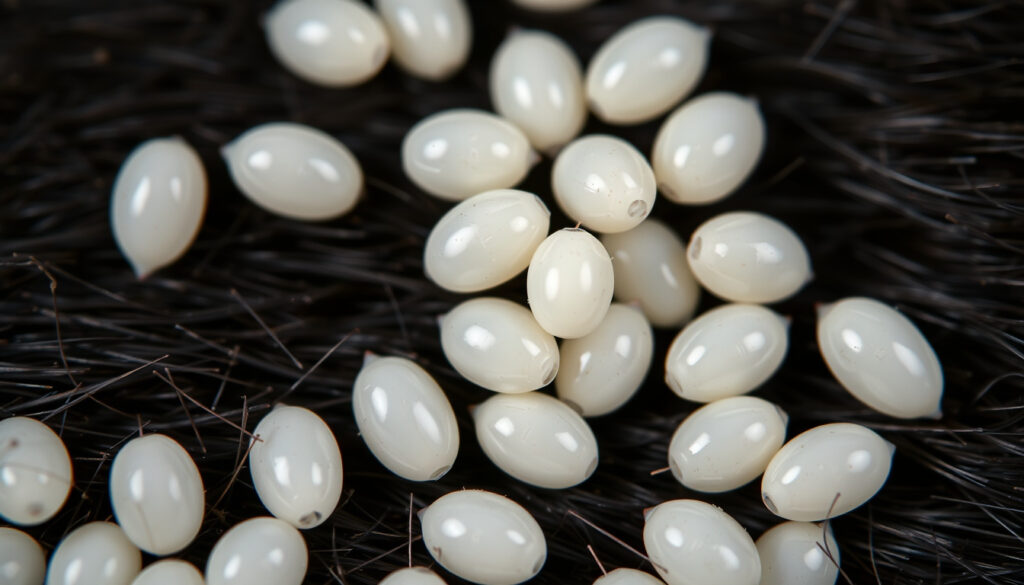
What Do Flea Eggs Look Like? Complete Identification Guide
Identifying tiny white specks on your pet is tricky—those flecks could be flea eggs or harmless debris like dandruff. This guide shows you exactly what flea eggs look like, how to tell them apart from common look-alikes, and where they hide in your home.
Size: 0.5 mm long · Color: white or off-white · Shape: oval · Common confusion: flea dirt or dandruff · Hatching time: 2-14 days
Quick snapshot
- Flea eggs measure 0.5 mm in length and 0.25 mm in width (West Pest Co)
- They are pearly off-white, oval-shaped, with smooth rounded ends (Itch Pet)
- Cat and dog flea eggs are identical in appearance (Itch Pet)
- Exact appearance variations of dead flea eggs
- Whether humidity-related texture changes affect identification in dry climates
- No single elimination method guarantees 100% kill of all flea eggs
- Eggs hatch within 2-12 days depending on temperature and humidity (Celsius Herbs)
- A single female flea can lay up to 50 eggs per day (Celsius Herbs)
- Flea eggs fail to hatch if humidity drops below 50% (Celsius Herbs)
- Vacuuming removes eggs from carpets and furniture daily
- Wash pet bedding at 60°C or higher to kill eggs
- Combine multiple methods—environmental treatment is essential
| Attribute | Value |
|---|---|
| Length | 0.5 mm |
| Width | 0.25 mm |
| Color | pearly off-white translucent |
| Shape | oval, smooth, rounded ends |
| Texture | smooth, hard, non-sticky |
| Common look-alikes | salt grains, dandruff, sand |
Are fleas’ eggs white or black?
Flea eggs are white or off-white—never black. Freshly laid eggs appear nearly translucent, then dry to a pearly off-white color (West Pest Co). This pale coloring is one reason they blend so easily into light pet fur and light-colored bedding.
Size and shape details
Flea eggs measure approximately 0.5 mm in length—about the size of a grain of salt—making them nearly microscopic (PetMD). Their oval shape with two rounded ends distinguishes them from cubic salt crystals or irregular debris. They’re smooth, hard, and non-sticky, which allows them to roll off pet fur and fall onto carpets and furniture (West Pest Co).
Color variations
The color shifts slightly depending on age and humidity. In humid environments, flea eggs appear moist and glossy. In dry conditions, they become brittle and less reflective (Celsius Herbs). The pearly white tone makes them visible in piles on dark backgrounds but easy to miss against light-colored surfaces.
What do flea eggs look like on cats and dogs?
Flea eggs on cats and dogs look identical—tiny pearly white ovals that are hard to spot on light fur but become visible when they accumulate in piles on dark surfaces or bedding (Itch Pet). They’re smooth and oval, measuring around 0.5 mm, so you may need a magnifying glass to confirm their shape.
On pet fur
On pets, flea eggs are smooth and non-sticky, so they don’t cling to fur the way flea dirt does. Instead, they tend to roll off and fall onto nearby surfaces like pet beds, carpets, and furniture cushions (West Pest Co). This is why you’ll often find eggs in pet bedding rather than directly on the animal.
Magnified view
Under magnification, flea eggs show a distinct oval shape with smooth, rounded ends—similar to a grain of rice. This contrasts with dandruff, which appears irregular, flaky, and crumbly when touched (West Pest Co). The texture test is simple: roll a speck between your fingers. Flea eggs feel smooth and hard; dandruff crumbles.
Cat flea eggs and dog flea eggs are identical in size, color, and shape, so identification methods work for both species (Itch Pet). The biggest difference is the texture and shape—if you roll a speck between your fingers, a flea egg will feel smooth and hard.
How do you know if fleas have laid eggs?
Flea dirt confirms that adult fleas are actively feeding on your pet, while flea eggs indicate the beginning of a flea problem that could expand rapidly if not controlled (Celsius Herbs). A single female flea can lay up to 50 eggs per day, which means even a small number of adults can quickly produce a large infestation.
Signs of infestation
You’ll typically find flea dirt at the base of the tail, behind the ears, and on the neck of dogs, or on the groin, underarms, and abdomen of cats (Celsius Herbs). Flea dirt appears as dark brown or black specks that are irregular and crumbly—fundamentally different from smooth, oval flea eggs (Pet Bucket).
Flea eggs vs flea dirt
The easiest way to tell them apart is the paper towel test: place the suspected specks on a moist white tissue. Flea dirt turns reddish-brown because it contains digested blood, while flea eggs remain pale and white (NexGard). Flea dirt also clings somewhat to fur, whereas eggs are non-sticky and tend to fall off.
Finding flea dirt means you have feeding adult fleas right now. Finding flea eggs means the population is reproducing—and 90% of the flea life cycle happens off your pet in the environment (Celsius Herbs).
What do flea eggs look like in the house?
In the home, flea eggs appear as tiny white ovals scattered across surfaces where pets spend time. They blend into light-colored carpets and upholstery, making them difficult to spot until populations grow large enough to be visible in accumulations on dark surfaces (West Pest Co).
On furniture and clothes
Flea eggs commonly fall onto pet bedding, couches, rugs, and furniture cushions. They create a distinctive “salt and pepper” pattern when mixed with dark flea dirt on pet beds or carpets (West Pest Co). Eggs can also appear on clothing if a pet has been resting on fabric or if you handle an infested animal.
Dead eggs appearance
Dead flea eggs may appear similar to viable eggs but are non-viable and won’t hatch. They retain the oval shape but won’t produce larvae. In low-humidity environments, eggs may dry out and become brittle before losing viability (Celsius Herbs). Without magnification, distinguishing dead from live eggs is difficult.
What kills 100% of fleas in the house?
No single method eliminates 100% of flea eggs in all conditions, but consistent multi-pronged approaches dramatically reduce populations. Daily vacuuming removes eggs from carpets and upholstery, while washing bedding at 60°C or higher kills eggs on fabric (Celsius Herbs).
Triggers for hatching
Flea eggs hatch in 2-3 days under ideal warm, humid conditions (70-85°F with 50-70% humidity) and may take up to 12 days in cooler or drier environments (Celsius Herbs). Eggs fail to hatch entirely if humidity drops below 50%, which is why controlled indoor environments can slow—but not stop—infestations.
Vacuuming effectiveness
Daily vacuuming physically removes eggs from the environment, but it doesn’t kill larvae or pupae that may already be developing in carpet fibers. Professional-grade steam cleaning or insect growth regulators (IGRs) target the eggs and larvae that vacuuming misses. Combining daily vacuuming with targeted environmental treatments provides the most reliable control (Celsius Herbs).
How to identify flea eggs: step by step
- Gather your tools: A magnifying glass and a sheet of dark paper will help you see the tiny white specks more clearly.
- Check pet bedding: Flea eggs fall off pets and accumulate in bedding first. Look for small white ovals among darker debris.
- Perform the texture test: Roll a speck between your fingers. Smooth and hard? Likely an egg. Crumbly or gritty? Likely flea dirt, sand, or salt.
- Try the paper towel test: Place suspected specks on a moist white tissue. Reddish-brown discoloration confirms flea dirt. Pale white means eggs.
- Compare shape and size: Flea eggs are oval with rounded ends, resembling grains of rice. Salt grains are cubic; dandruff is irregular and flaky.
- Look for patterns: A “salt and pepper” mix of white eggs and dark flea dirt indicates an active infestation on bedding or carpets.
What we know for sure
- Flea eggs are white and oval, 0.5 mm in length
- They are smooth, hard, and non-sticky
- Cat and dog flea eggs look identical
- Flea dirt is dark, crumbly, and turns red when wet
- A single female flea lays up to 50 eggs per day
- 90% of the flea life cycle occurs off the pet
- Eggs hatch in 2-12 days depending on conditions
What remains unclear
- Exact visual differences in dead flea eggs
- How humidity affects texture enough to aid identification
- Whether all elimination methods truly achieve 100% egg kill
What experts say
The biggest difference is the texture and shape. If you roll a speck between your fingers, a flea egg will feel smooth and hard. Dandruff will crumble, and salt will feel gritty.
— West Pest Co (Pest Control Experts)
Flea eggs indicate the beginning of a flea problem, while flea dirt shows that adult fleas are already feeding on your pet. A single female flea can lay up to 50 eggs per day which will lead to rapid infestations if not controlled.
— Celsius Herbs (Herbal Pest Guide)
Flea dirt stains moist white tissue red for identification. This simple test confirms the presence of digested blood and active feeding fleas.
— NexGard (Parasite Control Authority)
The pattern is clear: flea eggs are small, pale, and smooth where flea dirt is dark and crumbly. For pet owners, this distinction matters more than it might seem. Spotting eggs early means you can act before that single female flea turns 50 eggs per day into a full infestation. Vacuum daily, wash bedding thoroughly, and treat the environment—not just the pet—to regain control.
Related reading: fitted sheets · tall chest of drawers
Spotting flea eggs is easier when you understand the full life cycle, including flea adults eggs larvae pupae that infest pets and furniture alike.
Frequently asked questions
What triggers flea egg hatching?
Flea eggs hatch in 2-3 days under warm, humid conditions (70-85°F with 50-70% humidity) and may take up to 12 days in cooler or drier environments. Eggs fail to hatch entirely if humidity drops below 50%.
What’s the worst month for fleas?
Flea populations typically peak in warmer months, but indoor heated environments allow fleas to survive year-round. In many regions, late summer and early autumn see the highest infestations.
Why am I finding flea dirt but no fleas?
Flea dirt is feces from feeding adult fleas. If you see flea dirt, adult fleas are present—possibly hiding in fur, under furniture, or in crevices. Fleas spend most time off the host, so they may not be visible on the pet.
Will vacuuming daily get rid of fleas?
Daily vacuuming removes flea eggs from carpets and furniture, but it doesn’t kill larvae, pupae, or deeply embedded eggs. Combine vacuuming with environmental treatments like steam cleaning or insect growth regulators for reliable control.
What do flea eggs look like on furniture?
Flea eggs on furniture appear as tiny white ovals that blend into upholstery and cushions. They’re smooth and non-sticky, so they roll off fabric onto underlying surfaces like cushions and pet beds.
What do dead flea eggs look like?
Dead flea eggs retain the oval shape but won’t hatch. Without magnification and expert knowledge, it’s nearly impossible to visually distinguish dead from viable eggs.
What do flea eggs look like on clothes?
Flea eggs on clothing appear as tiny white specks similar to salt grains. They’re smooth and oval, unlike the cubic shape of salt crystals or the irregular flakes of dandruff.
More related posts
 How to Debloat Your Face: Fast Depuffing Solutions
 Frieren: Beyond Journey’s End Guide – Episodes, Season 2, Reviews
 Katherine Kelly: Biography, Children, Husband & Career
 Birmingham vs Sheffield United: preview, how to watch, H2H facts
 Ruffles Sabor Jamon Crisps Recall: Undeclared Milk and Soya
 Premier League Darts Tickets – 2024 Schedule, Prices and How to Buy
 iPhone 16 Pro Max Wallpaper – Size and Free Downloads
 Younger (TV Series): Finale, Love Triangle & Spin-off Explained