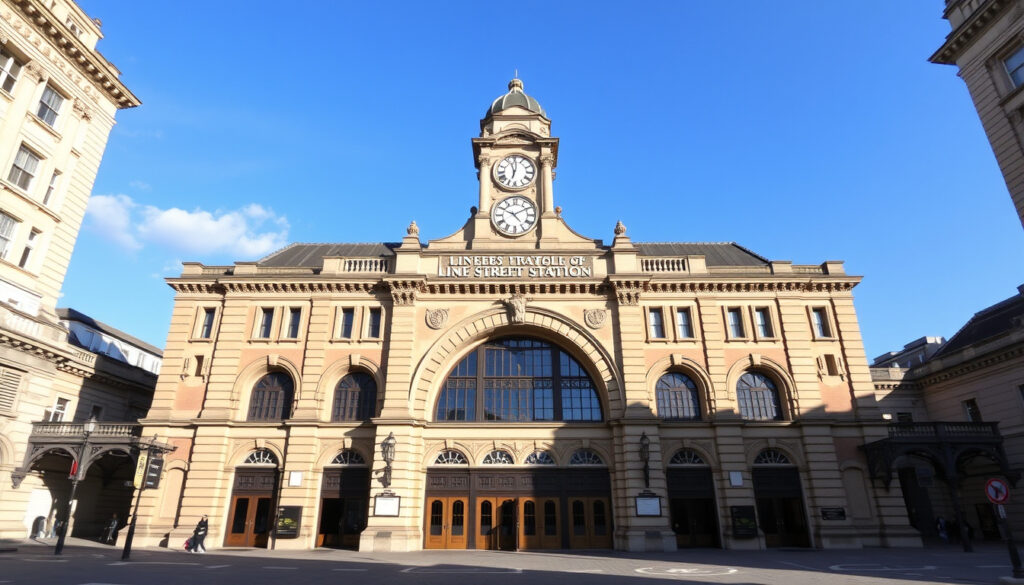
Liverpool Lime Street Station: Map, Facilities & Guide
If you’ve ever stepped off a train at Liverpool Lime Street and wondered whether you were at the right station, you’re not alone. Liverpool operates two main rail hubs that even locals mix up — and picking the wrong one can add 20 minutes to your journey. This guide cuts through the confusion with verified facts, maps, and what you actually need to know before you travel.
Status: Largest and oldest station in Liverpool · Rating: 5 stars by Simon Jenkins · Operator: Network Rail · Annual passengers: Nearly 20 million
Quick snapshot
- Opened in 1836, expanded in 1849 with château-like building (Network Rail)
- Lime Street High Level serves mainline trains; Low Level serves Merseyrail Wirral Line (Wikipedia)
- Step-free access to all platforms, category A compliant (Network Rail)
- Specific closure details beyond bank holiday overground service suspension
- Lime Street Gateway project completed recent enhancements at station entrance (Remitly)
- Network Rail interactive map available with accessibility features and live camera feeds (Network Rail)
The table below summarises the essential specifications for Liverpool Lime Street, drawing from official rail infrastructure sources.
| Attribute | Detail |
|---|---|
| Name | Liverpool Lime Street |
| Location | Liverpool city centre, Merseyside |
| Address | Lime Street, Liverpool, Merseyside, L1 1JD |
| Operator | Network Rail |
| Status | Open (check National Rail for temporary closures) |
| Facilities | Shops, toilets, WiFi, step-free access, cycle storage |
| Annual passengers | Nearly 20 million |
| Platform count | 10 mainline (High Level) plus 2 Merseyrail (Low Level) |
Is Liverpool Lime Street station the same as Liverpool Central station?
No — and confusing the two is one of the most common travel mistakes in Liverpool. Liverpool Lime Street serves long-distance national rail services including Avanti West Coast, East Midlands Railway, and Northern. Liverpool Central operates exclusively on the Merseyrail network, handling Northern and Wirral line traffic only. The distinction matters: arriving at Lime Street when you needed Central (or vice versa) means a separate train or tram journey through the city centre.
Key differences between the stations
The operational split is straightforward once you understand the layout. Liverpool Lime Street has two levels: the High Level platforms handle mainline intercity and regional trains, while the Low Level platforms (A and B) serve the Merseyrail Wirral Line. Liverpool Central is entirely underground, making it the busiest underground station outside London. This underground design reflects its role as a rapid-transit style hub rather than a traditional intercity terminus.
- Lime Street: 10 mainline platforms (High Level) plus 2 Merseyrail platforms (Low Level)
- Liverpool Central: Full underground station on two levels serving Merseyrail only
- Lime Street annual passengers: nearly 20 million; Central daily passengers: 40,000
Which services each station offers
At Lime Street, you can board trains to London Euston, Birmingham, Manchester, Leeds, and other major cities. At Liverpool Central, the focus is purely local: the Northern Line runs south to Southport, and the Wirral Line circles through Birkenhead, New Brighton, and West Kirby. Neither station competes for intercity traffic — they serve fundamentally different travel purposes.
The Low Level platforms at Lime Street catch many travellers off guard. Navigation requires descending to platforms A and B via escalators or lifts from the main concourse — they are not at street level.
Are there two train stations in Liverpool?
Liverpool has four National Rail stations that passengers commonly use, though Lime Street and Central dominate both foot traffic and confusion. Beyond those two, Liverpool South Parkway serves as a parkway station for the south of the city, and a handful of smaller stations handle suburban traffic. For most visitors navigating between the city centre and airport, Anfield, or Birkenhead, only Lime Street and Central will be relevant.
Overview of Liverpool’s stations
- Liverpool Lime Street: national intercity and regional mainline services
- Liverpool Lime Street Low Level: Merseyrail Wirral Line interchange
- Liverpool Central: Merseyrail Northern and Wirral lines
- Liverpool South Parkway: airport link and southern services
Lime Street vs other stations
When visitors ask “Is Lime Street the main station?” — yes, it is. Liverpool Lime Street opened in 1836 and received its château-style building expansion in 1849, establishing it as the city’s principal railway gateway. Its position in the city centre, adjacent to major bus connections and the taxi rank on Lord Nelson Street, reinforces its role as the default arrival point for intercity travellers. Liverpool Central, while busier by platform throughput with 3,979,547 passengers per platform, focuses exclusively on local Merseyrail services and does not compete for mainline routes.
What is Liverpool’s main train station called?
Liverpool’s primary rail hub is Liverpool Lime Street. It handles the vast majority of intercity traffic and carries nearly 20 million passengers annually, according to Network Rail (Infrastructure Operator). The station serves as the terminus for Avanti West Coast services to London, East Midlands Railway to Sheffield and Nottingham, and Northern services to Leeds and Manchester. For any visitor arriving from outside Merseyside, Liverpool Lime Street is almost certainly their arrival point.
Role of Lime Street
Lime Street holds the role that major cities assign to their primary intercity station. National rail services radiate outward to London, Birmingham, the Midlands, Yorkshire, and across the North West. The High Level platforms (numbered 1 through 10) handle this mainline traffic, while the Low Level platforms serve as an interchange point for Merseyrail’s Wirral Line. This dual-level design means Lime Street functions as both a national hub and a local interchange.
Why it’s the main hub
Simon Jenkins awarded the station 5 stars in Britain’s 100 Best Railway Stations, citing its architectural character and operational efficiency. The station’s age and location explain its primacy: it was the first major railway terminus built in Liverpool, and its central position has been reinforced by successive upgrades including the recent Lime Street Gateway project. When visitors ask “What is Liverpool’s main train station called?”, the answer remains Lime Street by both historic precedent and current function.
For intercity travellers arriving in Liverpool, Lime Street is not just the default choice — it is effectively the only choice. National rail services from London, Manchester, Birmingham, and Leeds terminate at Lime Street. Only those arriving on Merseyrail local services from Birkenhead or the Wirral will find themselves at Central.
What’s near Liverpool Lime Street station?
Lime Street sits on the edge of Liverpool’s city centre, placing it within a short walk of major attractions, shopping districts, and eateries. The Walker Art Gallery, World Museum, and the central shopping area around Liverpool One are all reachable within 10-15 minutes on foot. The Lime Street Gateway project has improved the station’s immediate approach, but the surrounding streets still require some navigational awareness — the station entrance sits on Lime Street itself, with the Lord Nelson Street entrance providing access to the concourse and help points.
Attractions and amenities
- Upper Crust, Starbucks, Costa Coffee, Boots, and WH Smith shops on concourse
- Male and female toilets on concourse near Lord Nelson Street entrance
- National Key toilets and baby changing facilities available
- Cafes and eateries within 5-minute walk in multiple directions
- 52 cycle storage spaces at Lord Nelson Street and Skelhorne Street with CCTV coverage
Map and directions
Network Rail (Infrastructure Operator) provides an interactive map for Liverpool Lime Street that shows platform locations, accessibility features, and live camera feeds. The map is particularly useful for checking which entrance corresponds to your arrival platform — the Lime Street entrance and the Lord Nelson Street entrance serve different parts of the concourse, and the Low Level platforms are accessed via escalators or lifts from the main concourse level.
What are the rough areas in Liverpool?
The area immediately around Liverpool Lime Street station is generally safe, with British Transport Police maintaining a permanent station in Rail House on Lord Nelson Street. The station design complies with crime prevention standards including enhanced lighting, help points on Skelhorne Street and near the car park, and CCTV coverage throughout. For visitors familiar with standard urban rail hubs, Lime Street presents no unusual security concerns — though standard city centre awareness applies after dark, as it would at any major UK rail terminus.
Safety around the station
British Transport Police presence at Lime Street provides a visible security layer that distinguishes it from smaller stations. Help points on the Skelhorne Street side and near the car park connect directly to control rooms, meaning assistance is available within minutes of any incident. The station concourse itself is well-lit and designed with natural surveillance principles — a point explicitly noted in Network Rail Media Centre (Rail Safety Authority) reporting on station safety standards.
- British Transport Police station at Rail House, Lord Nelson Street
- CCTV coverage throughout concourse and platform areas
- Help points on Skelhorne Street side and near car park
- Enhanced lighting and crime prevention through environmental design
Where to avoid
For visitors heading to Anfield stadium match days or late-night events, the area around Lime Street functions as a departure and arrival hub rather than a destination. Standard crowd management applies: arrive early, use official taxi ranks rather than street hailing after matches, and follow staff instructions on platform assignments. The station’s role as a major event-day terminus means that congestion, not crime, represents the primary visitor concern on match days.
Merseyrail was named the UK’s first fully secure rail network by the Department for Transport in January 2009, and notifiable crimes on the network have halved since the 2003 concession start. However, Liverpool Central has received isolated user reviews describing it as potentially unsafe late at night — the underground design limits natural surveillance compared to Lime Street’s open-air concourse.
How to get from Liverpool Lime Street to Anfield
Anfield stadium lies roughly 2 miles north of Lime Street, a journey that takes 30-45 minutes by public transport on match days. No direct train runs the route — instead, visitors transfer to Merseyrail services from Lime Street Low Level to Sandhills station, then complete the journey by bus or on foot. The walk from Sandhills to Anfield is approximately 20 minutes through residential streets. During match days, Merseyrail runs additional services to accommodate crowd flow, and official match-day travel information publishes on the Merseyrail website approximately one week before each fixture.
How to get from Liverpool Lime Street to Liverpool Airport
Liverpool John Lennon Airport does not connect directly to Lime Street by rail. The standard route involves taking Merseyrail Northern Line services from Liverpool Central to Liverpool South Parkway, then completing the journey by bus or taxi. The total travel time is approximately 45-60 minutes depending on connection timing. Alternatively, taxis from Lime Street to the airport take roughly 20-25 minutes and cost between £15-25 in standard traffic.
Nearly 20 million passengers pass through Liverpool Lime Street every year.
Network Rail (Infrastructure Operator)
We were named the UK’s first fully secure rail network by the Department for Transport in January 2009.
Merseyrail (Rail Operator)
For visitors choosing between Liverpool’s rail hubs, the decision comes down to route type. Arriving on national rail services from London, Birmingham, or Manchester means Lime Street. Arriving on Merseyrail local services from Birkenhead, Chester, or the Wirral means Central. The stations do not compete — they serve different networks — but choosing correctly saves a 10-20 minute detour through the city centre. Liverpool Lime Street’s category A accessibility, 5-star rating, and British Transport Police presence make it the more visitor-friendly option for those unfamiliar with the city. Liverpool Central’s role as the busiest underground station outside London reflects its importance to local commuters, not tourist traffic. For those travelling to Anfield or the airport, advance planning matters more than station selection — neither hub offers a direct connection, and match-day rail services require checking the Merseyrail (Rail Operator) schedule before departure.
Related reading: driving lessons near me · nice walks near me
eastmidlandsrailway.co.uk, en.wikipedia.org, avantiwestcoast.co.uk, tripadvisor.com, tripadvisor.com
Frequently asked questions
Where is Liverpool Lime Street station located?
The station is located on Lime Street in Liverpool city centre, Merseyside, with postcode L1 1JD. The main entrance faces Lime Street itself, with a secondary entrance on Lord Nelson Street providing concourse access.
What facilities are available at Liverpool Lime Street station?
The station offers shops including Upper Crust, Starbucks, Costa Coffee, Boots, and WH Smith on the concourse. Male and female toilets are located near the Lord Nelson Street entrance. There are 52 cycle storage spaces with CCTV at Lord Nelson Street and Skelhorne Street, public Wi-Fi, step-free access to all platforms, and accessible booking facilities with induction loops.
How to get from Liverpool Lime Street Station to Anfield?
Take Merseyrail Wirral Line services from Lime Street Low Level (platforms A and B) to Sandhills station, then walk approximately 20 minutes north to Anfield. On match days, check Merseyrail’s official schedule for additional services and platform assignments.
What is the address of Liverpool Lime Street station?
Lime Street, Liverpool, Merseyside, L1 1JD. Taxis and drop-offs should confirm whether they need the Lime Street entrance (for High Level platforms) or the Lord Nelson Street entrance (for concourse and Low Level access).
Are there lockers at Liverpool Lime Street Station?
Verified information about luggage lockers at Liverpool Lime Street was not available in current research. For current locker availability and pricing, check with station staff on arrival or consult the National Rail website for the latest facilities information.
What is the timetable for Liverpool Lime Street station?
Live timetables and departure information are available through the National Rail website, National Rail Enquiries app, and the Network Rail interactive station map. Trains operate from early morning until late evening, with reduced service on Sundays and bank holidays.
How to travel from Liverpool Lime Street station to Liverpool Airport?
Take Merseyrail Northern Line from Liverpool Central to Liverpool South Parkway, then complete the journey by bus or taxi. Total travel time is approximately 45-60 minutes. Alternatively, taxis from Lime Street take 20-25 minutes and cost £15-25.
More related posts
 Lori Harvey: Age, Relationships, PCOS & Endometriosis
 Charlie Drake: Biography, Catchphrases & Legacy
 Therica Wilson-Read – Unverified Fraud Claims Examined
 Pandora Rings: Quality, Materials, Price & Worth Buying
 Philadelphia Eagles vs 49ers Match Player Stats: 2026 Game
 Slow Horses Season 3 – Release Date, Cast, Episodes, Reviews
 Hyacinth Bucket Actress Dies at 96: Legacy & Quotes
 Robert Hardy: Death, Cause of Death & Iconic Roles